
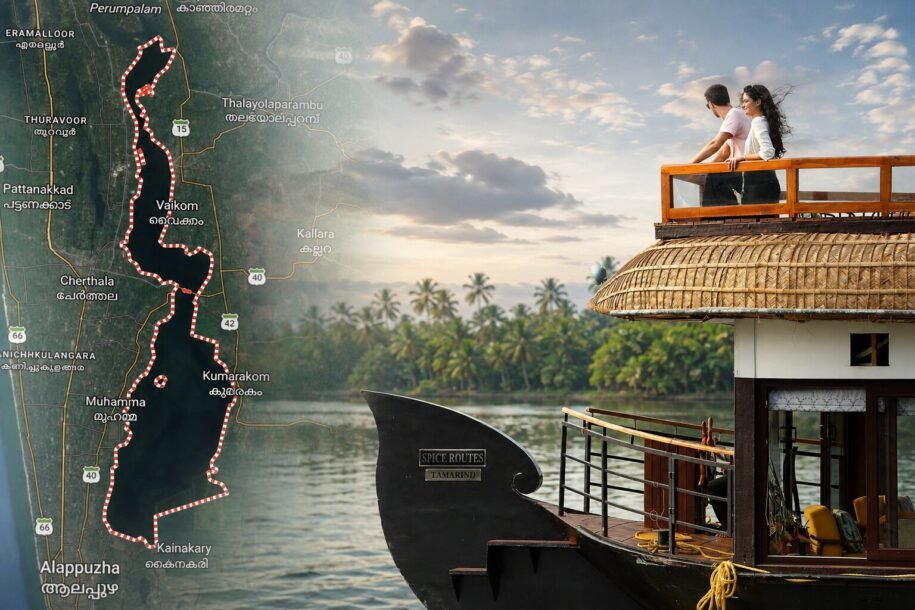
Anyone booking a Kerala backwater trip this year is running into a topic that didn’t matter much before: pollution certificates. The Kerala High Court got involved with Vembanad Lake’s houseboat industry, and the fallout is changing how bookings work.
Here’s what’s actually going on and what it means if you’re planning a cruise.
Why This Started
Vembanad is India’s longest lake and the heart of Kerala’s houseboat business. More than 1,300 houseboats currently run on it. Researchers who study the lake say that number is simply too high for the ecosystem to handle. Sewage, oil, solid waste, it’s been piling up for years, and parts of the backwaters have visibly changed color because of it.
The All Kerala Houseboat Owners Association ended up in court over this, and the judge didn’t mince words. Houseboats needed to prove they weren’t polluting the lake, full stop. The loose enforcement that had been going on for years wasn’t cutting it anymore.
What Actually Changed
The core requirement is a Certificate of Compliance for pollution prevention, something that technically already existed under the Inland Vessels Act of 2021. The rule was on the books. Nobody was really checking.
Now they are. Houseboats without valid certificates get barred from the lake once their compliance window runs out, and the Maritime Board has been running jetty inspections across Alappuzha to catch boats without proper paperwork. A few have already been pulled from service.
One thing worth flagging: shikaras are excluded from this particular order. They get registered separately, so if you’re booking a small shikara ride instead of an overnight houseboat, this whole certification issue doesn’t apply the same way.
On the industry side, houseboat owners aren’t just complaining about the rules, some are actually building solutions. Two owner associations teamed up with the National Institute of Standards and Technology to build a bio-digestive waste system that handles not just toilet waste but kitchen wastewater too, which turns out to be a bigger pollution source than most people assume. It’s being tested on select boats right now.
What This Means When You Book
Honestly, this works in your favor if you ask the right questions.
Ask your operator straight up whether their boats have valid pollution certificates. A legitimate company answers immediately. If you get a vague non-answer or the person sounds annoyed, that tells you something.
Ask whether the boat has a real working waste treatment system, not just a holding tank that gets emptied somewhere unclear. Older boats retrofitted for these standards vary a lot in quality depending on who did the work.
Expect fewer available boats in the short term. As inspections continue, the number of operating houseboats will probably shrink for a while, so book a bit earlier than you normally would, especially for peak season dates.
Prices might creep up too. Operators putting real money into proper waste systems and certification aren’t doing it for free, and some of that cost shows up in your quote. If you see a price that seems unusually low this year, it’s worth a second look before booking.
It’s Not Just the Boats
Houseboats aren’t solely to blame here, even though they’re the easiest target. The Thanneermukkom Bund, built in 1976 to keep saltwater out of the paddy fields, permanently altered how the lake flushes itself. Decades of agricultural runoff and urban waste played a role too. Houseboats get blamed first partly because they’re the most visible part of the problem, not necessarily the biggest one.
Still, the tourism side has a real responsibility here, and most people in the industry seem to agree the push toward certification was overdue. For travelers, picking operators who take this seriously isn’t just about avoiding a hassle at the jetty. It’s about keeping these waterways worth visiting.
Booking Without the Headache
At Spice Routes, our boats carry proper documentation and working waste systems that meet current standards, and we’re glad to answer questions about compliance before you book, not after. Rules are moving fast this year, so working with an operator who stays on top of them saves you one less thing to worry about while planning.
Got questions about what to expect for an upcoming trip? Ask before you book. It’s a fast changing situation, and a quick conversation beats a surprise at the boat.
Leave a Reply