
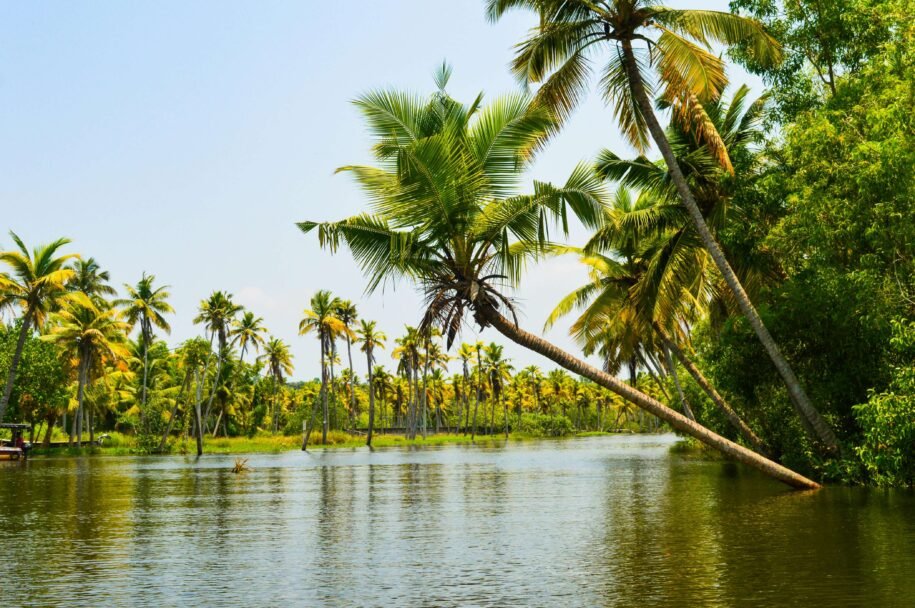
The “Venice of the East” label gets thrown around. Bangkok claims it. Udaipur uses it. Several Chinese cities apply it. Even some parts of Kerala itself compete for the title.
But the Kerala backwaters around Alleppey have the strongest claim. The comparison to Venice makes sense once you understand what it actually means.
The Canal Network Reality
Venice is built on water. Canals replace roads. Boats replace cars. Water is the infrastructure.
Kerala’s backwaters work similarly. Villages built along canals. Boats as primary transport. Water defining daily life.
The network spans hundreds of kilometers. Canals connecting to lakes. Lakes connecting to rivers. Rivers reaching the sea. The system is massive.
Like Venice’s Grand Canal branching into smaller waterways, Kerala has main channels splitting into narrow village canals.
Houseboats cruise these waterways just like Venice’s vaporettos navigate their canals. Water transport isn’t tourist attraction. It’s how life functions.
Traditional Boats Everywhere
Venice has gondolas. Iconic boats that define the city.
Kerala has kettuvallams. Traditional rice barges converted to houseboats. These boats are as symbolic to Kerala as gondolas are to Venice.
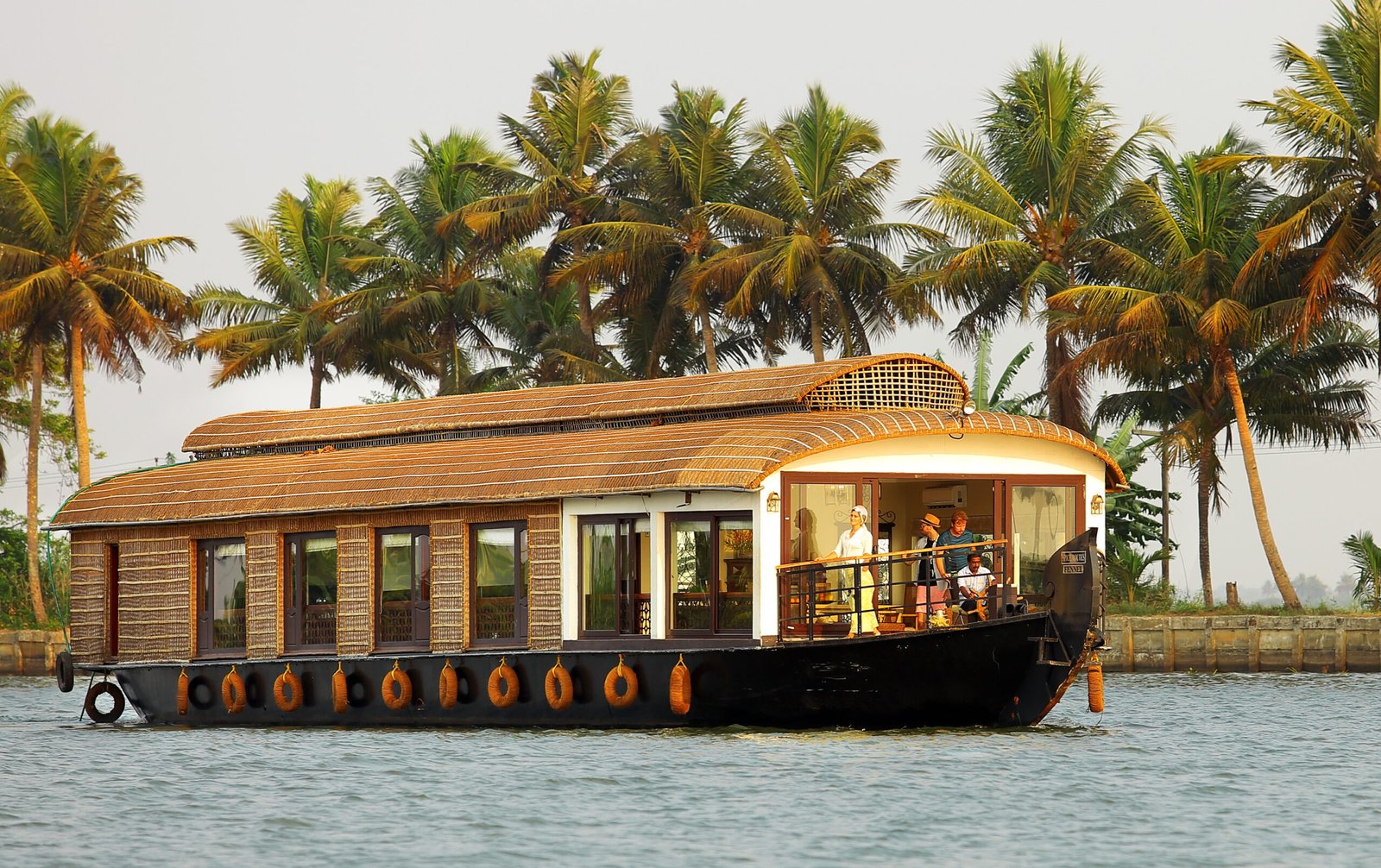
But it’s not just tourist boats. Working vessels fill the canals. Fishing boats. Cargo boats. Small passenger ferries. School boats.
Village children commute by boat. Like Venetian children once did. The working waterway culture matches Venice historically.
Architecture Follows Water
Venice built architecture adapted to water. Buildings rise from canals. Bridges connect everything.
Kerala villages along backwaters show similar adaptation. Houses face canals, not roads. Steps lead to water. Traditional homes designed for waterway access.
The old Kerala architecture, wooden construction, sloped roofs, open verandas, was built understanding water’s role.
Modern development changes this. But traditional villages still show water-first design philosophy.
Daily Life on Water
Venice developed entire culture around water. Markets on boats. Water delivery systems. Social life on canals.
Kerala backwaters still function this way in many areas. Floating shops selling vegetables from boats. Vendors paddling house to house. Toddy shops accessible mainly by water.
Laundry happens at canal edges. Bathing. Fishing from doorsteps. The water isn’t decoration. It’s infrastructure.
Spice Routes village visits show this daily reality. You see people living with water as Venice historically did.
Where the Comparison Breaks Down
Venice is urban. Dense. Historical grandeur. Monuments and museums.
Kerala backwaters are rural. Spread out. Natural beauty. Villages and farms.
Venice’s canals are saltwater. Kerala’s are mostly freshwater or brackish.
Venice declined as working city. Became tourist destination. Kerala’s backwaters still function as living waterway system.
The comparison works for water infrastructure. It breaks for culture, density, history, urban development.
Why Alleppey Specifically
Several Kerala areas have canals. But Alleppey earned the “Venice of the East” title most strongly.
The canal density around Alleppey is exceptional. The network here is particularly complex.
Alleppey developed as port city. Trade hub. Water was economic infrastructure, like Venice.
The houseboat tourism concentrated here. Visible water culture. Accessible to visitors.
Vembanad Lake connects to Alleppey’s canals. Creates scale matching Venice’s lagoon system.
The Tourist Parallel
Venice became tourist destination centuries ago. Water made it exotic to land-based Europeans.
Kerala backwaters became tourist destination more recently. But similar appeal. Water-based life exotic to most visitors.
Both places face similar tourism pressures. Too many visitors. Infrastructure strain. Authenticity questions.
Both try balancing tourism income with preserving actual water culture.
Houseboats in Kerala face some issues gondolas face in Venice. Commercialization. Environmental impact. Local versus tourist usage.
The Romantic Element
Part of Venice’s appeal is romance. Water, boats, unique atmosphere create feeling.
Kerala backwaters have similar romantic quality. Sunset cruises. Quiet canals. Traditional boats.
Couples book luxury houseboats for honeymoons. The water setting creates intimacy like Venice does.

Not identical romance. Different culture, different aesthetic. But water-based atmosphere that feels special similarly.
Environmental Challenges Mirror Each Other
Venice fights rising water. Flooding threatens the city constantly.
Kerala backwaters face water management issues too. Pollution. Salinity changes. Development pressure.
Both systems are fragile. Both require active preservation.
Tourism in both places creates environmental stress while providing economic reason to protect the waterways.
Why the Label Persists
“Venice of the East” stuck to Kerala backwaters because it captures something real.
Not claiming Kerala is like Venice in culture or history. Claiming the water infrastructure parallel is legitimate.
Both places organized life around canals. Both developed unique cultures because of water. Both offer experiences built on waterway systems.
The comparison helps people understand Kerala backwaters. If you know Venice, you get the concept. Water as infrastructure, not just scenery.
What Makes Kerala Different
Kerala’s backwaters extend beyond single city. Hundreds of kilometers versus Venice’s contained area.
Natural system versus built environment. Kerala’s canals follow landscape. Venice built canals into landscape.
Living agricultural economy. Rice paddies. Fishing. Working waterways. Venice’s working waterway culture mostly died.
Accessible nature. Birds, fish, vegetation. Venice is stone and water. Kerala is green and water.
Multiple religions coexisting peacefully along canals. Hindu temples. Christian churches. Mosques. Diverse in ways Venice isn’t.
The Experience Comparison
Riding gondola in Venice: romantic, historic, expensive, crowded.
Cruising houseboat in Kerala: peaceful, natural, affordable, often empty.
Both are water-based experiences. But very different execution.
Venice gives you human achievement. Built environment. History. Art.
Kerala gives you natural beauty. Living culture. Working waterways. Different appeal.
How Spice Routes Fits This
Spice Routes operates luxury houseboats that let you experience the “Venice of the East” comparison properly.

Not quick boat rides through canals. Multi-day cruises living on water like Venetians historically did.
Routes through narrow village canals. Not just main waterways. The intimate scale that matches Venice’s smaller canals.
Village programs show water-based life continuing. How communities still function around canals like Venice once did.
The traditional kettuvallam boats they use connect to Kerala’s boat heritage the way gondolas connect to Venice’s.
Quality matters. Venice’s best gondoliers know their craft. Spice Routes crews know backwater navigation, village connections, traditional knowledge.
The heritage farmhouse boarding facility at Spice Routes represents traditional Kerala architecture adapted to water. Like Venetian palazzos rising from canals.
The Label’s Future
Will Kerala backwaters keep the “Venice of the East” title?
As long as the canal system functions and remains accessible, probably yes.
The comparison is useful marketing. Helps international visitors understand what Kerala offers.
But risk exists. Over-tourism could damage the system like it damaged Venice.
Pollution, development, climate change all threaten backwater health.
Preserving the water culture that earned the title requires work. Venice shows what happens when tourism overwhelms authenticity.
Kerala has advantage. The backwater system is huge. Spreading tourism impact across wider area.
Places like Spice Routes focusing on responsible tourism, village partnerships, environmental practices help sustain what makes the comparison valid.
Beyond the Label
Ultimately Kerala backwaters don’t need Venice comparison.
They’re valuable as themselves. Unique ecosystem. Living culture. Natural beauty.
But “Venice of the East” communicates quickly. People get it. Water-based life. Boat culture. Unique experience.
When you cruise Kerala’s backwaters on a houseboat, you’re not experiencing imitation Venice. You’re experiencing Kerala’s own water culture that happens to share organizational principle with Venice.
Both cities organized around water. Both created unique cultures because of it. The parallel is real even if the cultures are completely different.
Experience the Venice of the East
Spice Routes luxury houseboats: spiceroutes.in
Navigate Kerala’s canal network, traditional kettuvallam boats, village waterway culture.
Leave a Reply